

Dan Worrall
-
Posts
1,131 -
Joined
-
Last visited
1 Follower

Recent Profile Visitors
3,180 profile views




Dan Worrall's Achievements

Heavyweight Boxer (5/6)
-
Dana, Best wishes for a long, happy and fulfilling retirement! Dan
-
Hi all, Thanks for the interest! I'm trudging along....there is much that has to be done, and I'm working hard at being as thorough and accurate as I can be on the historical/biographical parts, as well as the tutorial with its discussion of style. Kimber deserves no less! I spent today working on tune sources. It goes on and on. The basic transcriptions are all done in draft form, but there is a LOT of checking we must do on this before it goes out the door. My co-author Jarrett Branch has been busy taking the scribbled tunes and transcriptions and placing them in Finale software. We then compare the 'music audio' from the Finale notation and compare it with Kimber on slowed down recordings, and work to make corrections of the printed staves. It is difficult perhaps for anyone who hasn't done a lot of this - especially with music with heavy amounts of chordal accompaniment - to see why it takes so long, but it does! To make matters more complex, Jarrett and his wife have just had a first baby, and with that of course all schedules very naturally go out the window. We both hope to be done with the completed first draft in summer which would allow an autumn visit. Some English ale would be welcome! Meanwhile, our earlier book on Chris Droney just had a very nice review by Jack Talty; look for it in coming days in the Reviews section at the Concertina Journal website, www.concertinajournal.org All the best, Dan
-
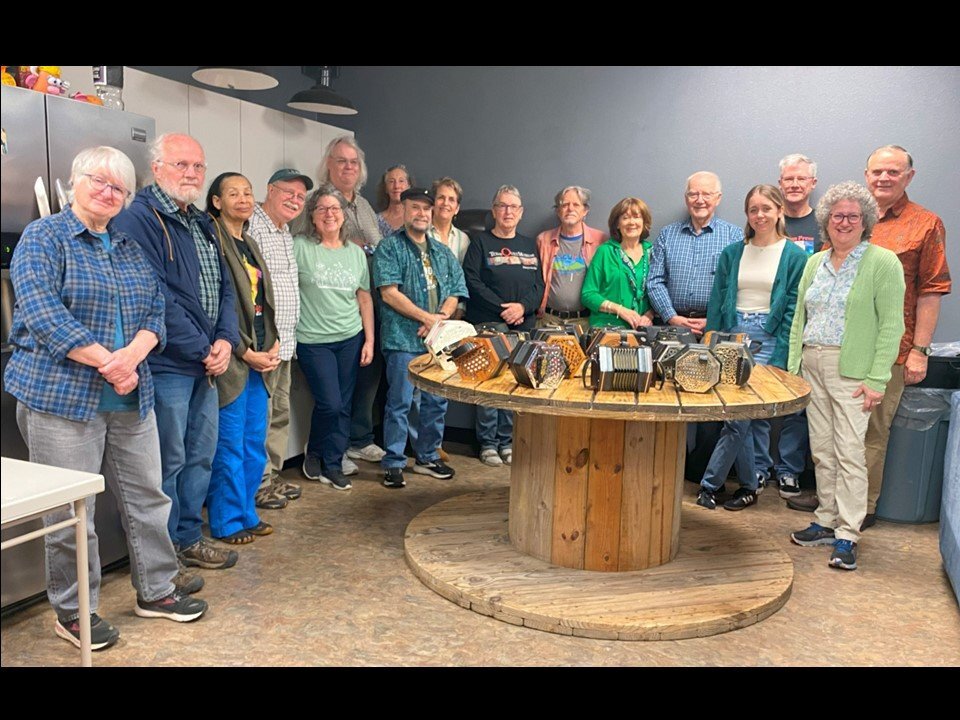
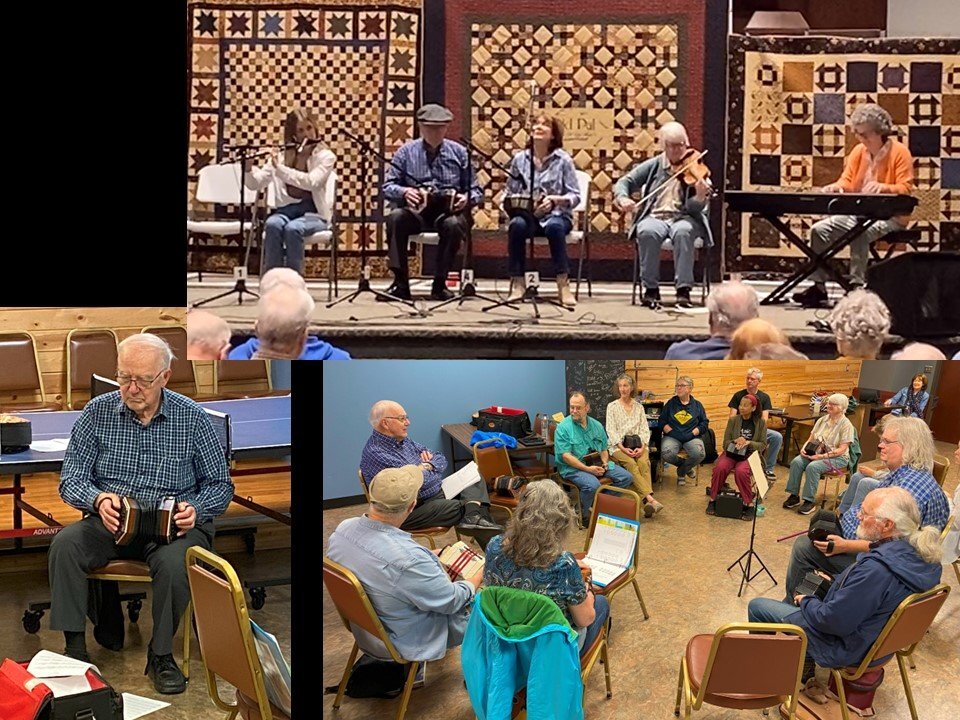
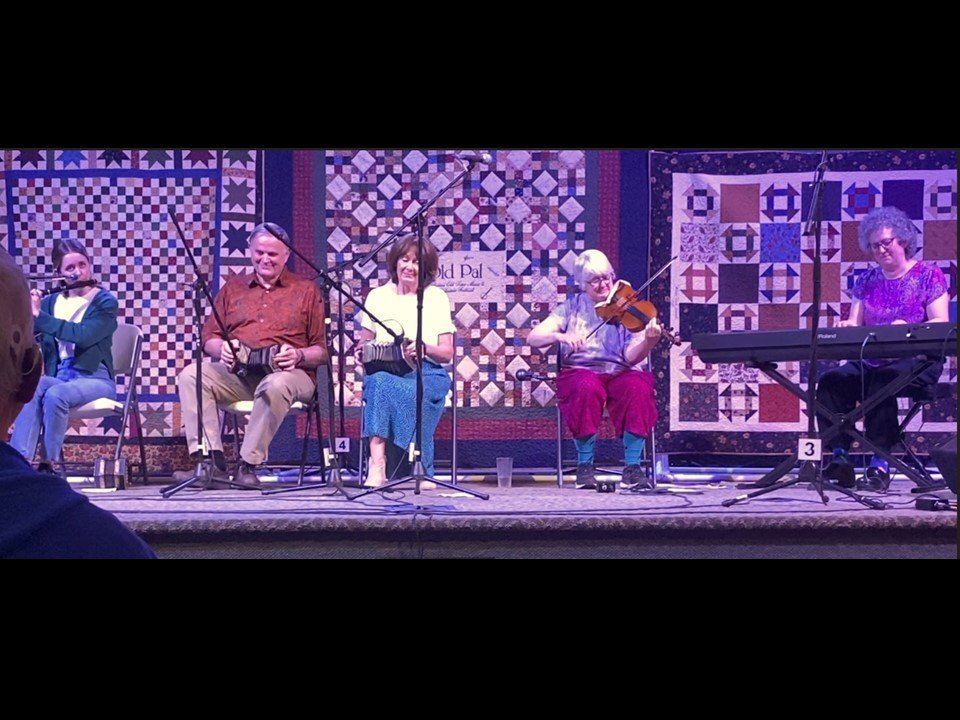
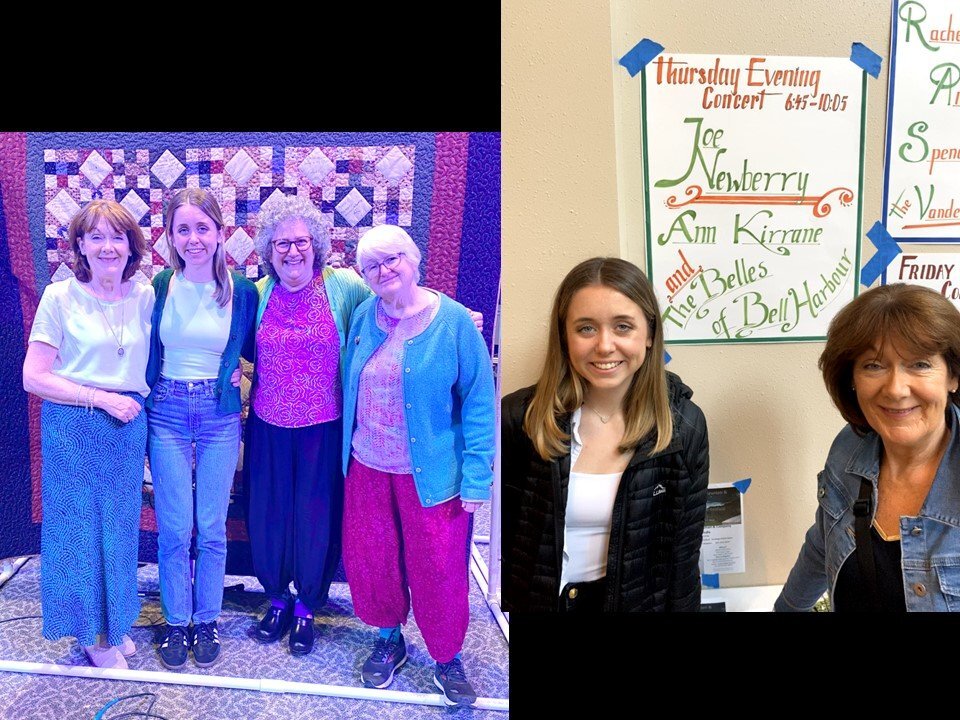
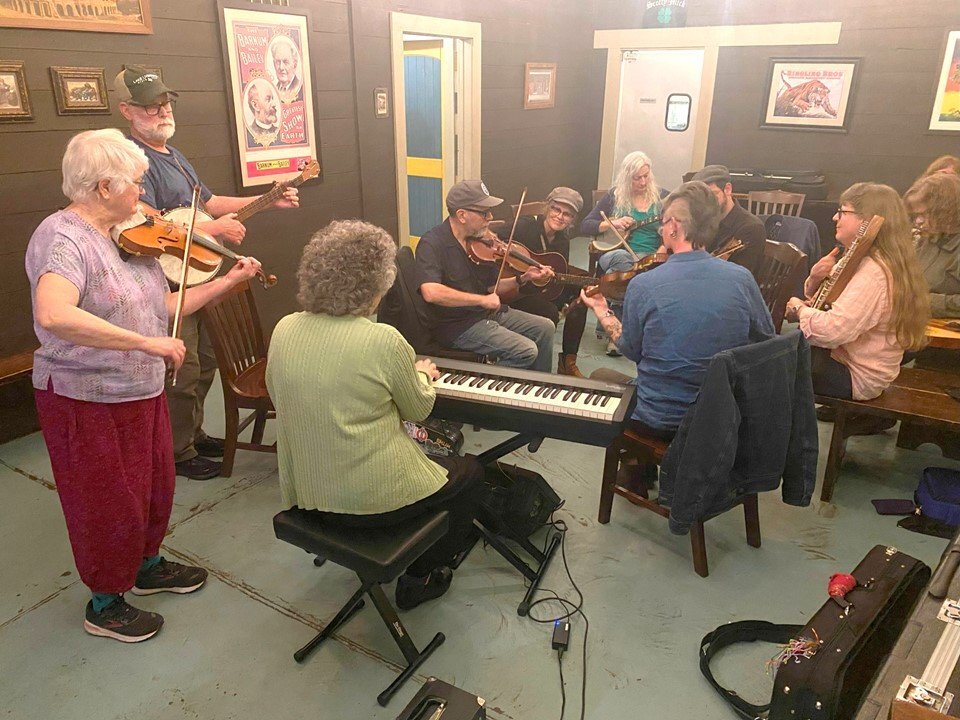
A wonderful weekend at the Palestine Texas old time music festival, with our concertina workshops. Many thanks to Ann Droney Kirrane, Frank Edgley, and Gary Coover (hailing from County Galway, Ontario, and Honolulu, respectively) for leading workshops, and for Ann and the Belles of Bell Harbour (including Maria Terres and Amy McFarland from Milwaukee and Mary Grace O'Neil from Boston) for providing some great Irish music and song amidst the many fabulous old time musicians. Besides Ann's concertina playing, each of the Belles is learning concertina on the side (their main instruments being fiddle, keyboard and flute), so concertinadom continues to grow... It was our largest of these concertina workshops within the larger Old Pal festival, with 19 concertinists including the instructors. Attached are some snapshots of the fun. Come join us next year!
- 1 reply
-
- 6
-

-
Kurt Braun's Passing
Dan Worrall replied to saguaro_squeezer's topic in General Concertina Discussion
Kurt was a true friend and a cheerful and valued presence at our concertina weekends at the Palestine music festival each year, going back to 2004. He will be greatly missed. -
I agree with Frank on the difference in systems, Wheatstone vs Jeffries....they both work fine for my simple purposes. Back in the (Victorian era) day, Jeffries instruments were the best, and regarded as such by nearly everyone that I know of in the historical record. When new, they were very fast and had/have this incredible 'bark' in their tone that is difficult to duplicate. I've searched for years for a good one, wanting 'that' tone yet with speed. And there's the rub. Not all of them, today, are of equal quality, by a long shot. I've gone through half a dozen over the last 40 years trying to find one that has the speed - or at least most of the speed - of my treasured Dipper CG, whilst still having that classic bark (listen to classic recordings of William Kimber, or of some of the old Irish players, while of course realizing that the tone doesn't always come through on the recordings). Many of them have been remuddled over the last century, and it is easy to destroy the tone and/or the speed. So my recommendation for those wanting a Jeffries is to first get a newly made instrument that appeals to you - especially one that has speed - and then have a long, leisurely search for a good Jeffries as a second instrument. It's a fun search! By the way, some Jeffries can be brought back to a quality state from the brink of doom. I've worked for six years getting a BbF up to snuff, before Steve Dickinson (valves pads and reed set) and Colin Dipper (button height and stroke) worked absolute magic with it. It is an absolute jewel now, and my long search is over. Too bad it isn't CG, but something about being a step lower in pitch brings out the best in the Jeffries tone, in my opinion.
-
Thank you, Morgana, that was very kind. I’m always very happy when someone enjoys my work. Keep an eye out later this year for my new book on William Kimber, another iconic player and a fascinating person. It’s a complete revision and extension of my 2005 book on him. Back to House Dance, is old time bush dancing still going strong in the rural Aussie outback? I really enjoyed experiencing it when I visited there 15 years ago with the late Peter Ellis, who was an amazing Anglo player and dance historian.
-
Only a little over six weeks to go for the 2024 concertina gathering at the Palestine Texas Old Time Music Festival. Join us for an early spring with azaleas, dogwoods...and concertinas! There are a variety of hexagonal activities this year, and some news: Ann Droney Kirrane, the Clare concertina player and singer, returns to Old Pal for a fifth time. She will hold workshops for intermediate to advanced concertina players on the north Clare style of playing. She is the daughter of the late Chris Droney, an iconic Irish concertina player; she and her family keep his wonderful style of playing alive. Music for her workshops is available now for confirmed attendees. Frank Edgley, the well-known musician and concertina builder from Windsor, Ontario, is planning to come to Old Pal. He has graciously agreed to lead workshops in beginning the Irish concertina, including ornamentation, as a complement to Ann's workshops. He just republished his 2001 tutor for the Irish concertina with Rollston Press, and that book will be available at Old Pal. He also will show us some of his newest Anglos from his workbench. Gary Coover, well-known Anglo player, teacher and concertina book publisher extraordinaire, plans to hold workshops on playing Anglo in the harmonic style as well as a reprise of his Shanty session for concertinas and voices. He will no doubt bring copies of various latest published books on the concertina from his Rollston Press. Ann Kirrane and her group, the Belles of Bell Harbour, will lead some workshops in Clare dance music, for all instruments. Some of the Belles are also concertina players! The idea of these workshops is to play a number of tune medleys at a reduced learning pace, so that they can be played later in the weekend to tempo in open sessions. Music for these workshops is available now for confirmed attendees. Ann and her group will appear in concert several times over the festival, most especially on Thursday evening, March 21. The Old Pal website gives a schedule of information on these appearances, as well as general information on the overall festival, of which the concertinas are only a small part: www.oldpalmusic.com . It is a small and friendly festival in a charming old town. If you wish to join us, just send a PM to Dan Worrall via this website. We can then hold you a place, and send out advance pdfs to you of music for the workshops. Please let us know your type of concertina, your skill level, and what your learning interests are. There are a wide variety of players coming, so with advance notice we can try to address special needs or interests. We're looking forward to seeing you there! All the best, Dan Worrall, Gary Coover, and Jarrett Branch Concertina workshop organizers
-
Just received my copy. Beautifully re-published; a great improvement in look and feel to the original, which was printed in the dot matrix printer days. Still the best single manual for learning Irish style Anglo in the manner of the old Clare players, in my opinion!
-
Yes, Sean is Ella Mae O'Dwyer's son, and was raised in Ardgroom where his family operated a dance hall. He is now retired and living in Dublin. I have a copy of his CD, and it is wonderfully old style. I wrote a brief description of him in my book House Dance (Rollston Press), where you can find QR codes for a number of recordings of playing by him and by his mother....all on old style German concertinas. He made me a present of his mother's German concertina, which we used in a project getting a group of modern Clare women to play tunes on it. The resulting CD is called Tripping from the Well, available from Oidhreacht an Chlair in Miltown Malbay, Clare. The old concertina was then donated to that organization in Miltown, and I believe it is still there.
-
I agree completely with Peter; very much the best to learn from the playing of the master himself. The transcriptions should, in most cases, pretty much match him note for note in his first playing of each tune. The tunes themselves can be found on YouTube if you cannot find them for purchase. Search on Chris Droney, and either Down from Bell Harbour, The Fertile Rock, or The Flowing Tide (his best 3 CDs). I believe that all the tunes from each of those recordings are on the You Tube site; not sure who posted them. Then use some sort of slow down software to slow him down to learning speed. I use The Amazing Slow Downer, from Roni Music, but there are others. Your PC probably has the ability to record audio from a YouTube, but I'm not too good at the particulars of that. Record the audio and then put that audio on your PC along with your slowdowner software of choice. It would be great to get those recordings re-issued for sale again. And if you live in the US, consider coming to the Palestine Old Time Music Festival March 21-23 2024. Chris Droney's daughter Ann Droney Kirrane will teach at our concertina workshop there, and her playing is very much in his style. We also will be doing both slow and to-tempo sessions of tunes from that book. There is a posting that I made on this site giving more information (search my name on this site and you'll find it). Send me a PM if you wish to join in! Either way, good luck. It is a great style to learn on the concertina.
-
Well done Gary and Frank for getting this very useful book published! I’ve had my copy of the original for years. A simple and graceful approach worthy of the old masters of the Clare (and Canadian!) countryside.
-
Concertinas At Sea: A History Of A Nautical Icon
Dan Worrall replied to Dan Worrall's topic in General Concertina Discussion
Thanks Roger and Takayuki for posting the links. Both volume 1 and 2 of the Anglo concertina history (2008) are available for free reading on Google Books; just search on my name and the word concertina and they’ll pop up. And they are still being sold on Amazon! -
How sad! It was a wonderful place and a link to one of the great old players.
-
Very nice, Alan! Just how old is it? And where were they based?
-
What a great story!